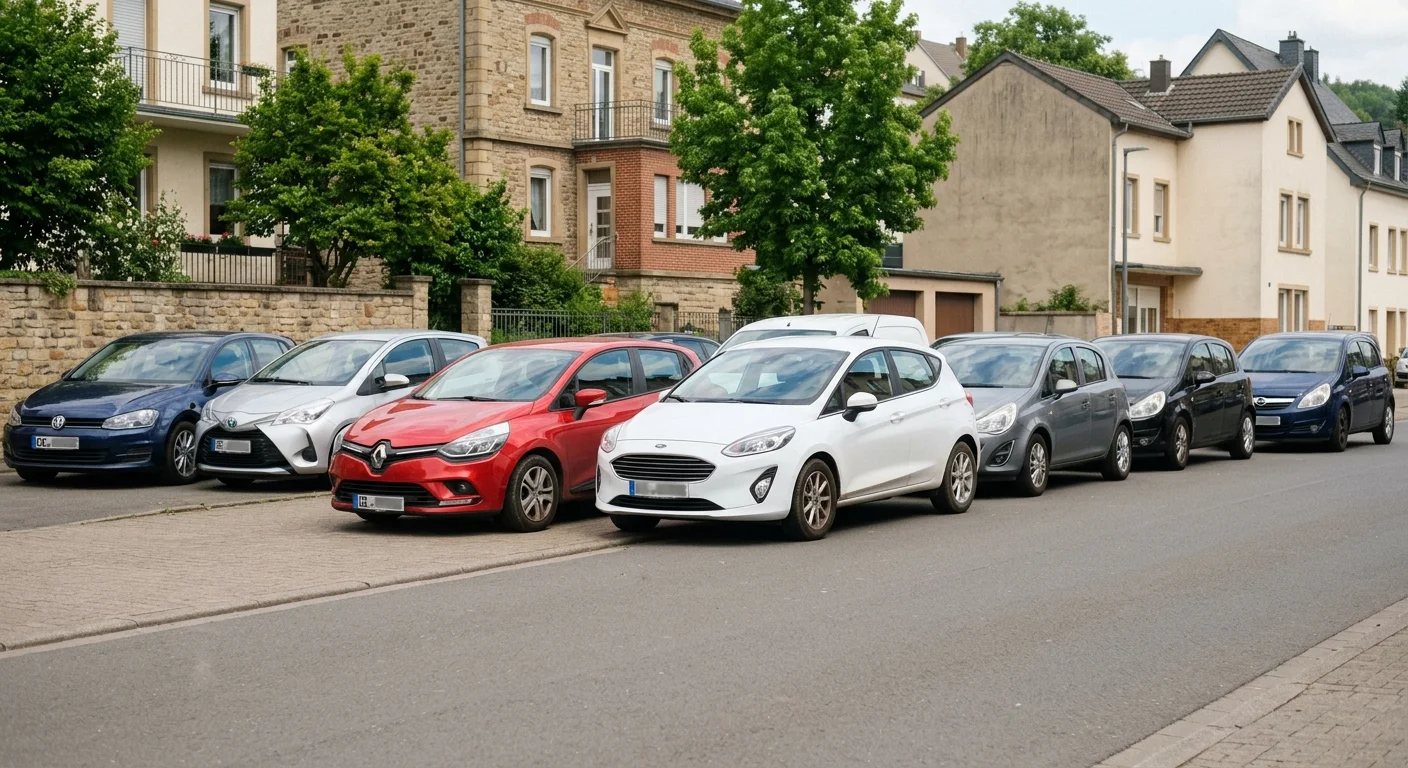
A hatchback is a passenger car body configuration featuring a rear door that hinges upward to provide access to a cargo area. Unlike traditional sedans, which feature a distinct three-box design separating the engine, cabin, and trunk, hatchbacks typically utilize a two-box layout where the passenger compartment and rear storage area share a single contiguous space. The rear access hatch incorporates the glass window and is counted as an additional door, giving rise to standard industry terms like three-door or five-door models. The hatchback design gained widespread popularity during the mid-to-late 20th century. While early utility-focused vehicles paved the way, pioneering post-war models such as the Renault 4, Renault 16, and the Volkswagen Golf defined the modern standard in the 1960s and 1970s. Global automakers quickly recognized that combining compact overall dimensions with a flexible interior architecture provided an ideal balance for motorists navigating growing urban centers, cementing the hatchback as a staple segment in European, Asian, and Americas automotive markets. Practically, hatchbacks are valued for their exceptional spatial efficiency and versatility. The presence of fold-down or split-folding rear seats allows drivers to significantly expand the rear load capacity, enabling the transport of bulky items that would not fit inside a standard sedan trunk. Their smaller footprint makes them easier to park and maneuver in tight city spaces, while diverse sub-segments—ranging from budget-friendly subcompact commuters to high-performance "hot hatch" variants—ensure their broad appeal across different lifestyle and driving requirements.
25% of ₹ 1500 (per day) ×